Kaanaya: A Script for Real Design Work
As a designer who’s worked with countless typefaces across various projects, I always approach a new font with a critical eye. Kaanaya, a script handwritten font, caught my attention not just for its aesthetic appeal but for its potential in real-world design scenarios. This review is based on testing it in actual projects—logo design, packaging, web headers, and more—to determine whether it’s a practical choice or a flashy one that doesn’t hold up under scrutiny.
The First Impression: A Handwritten Mood
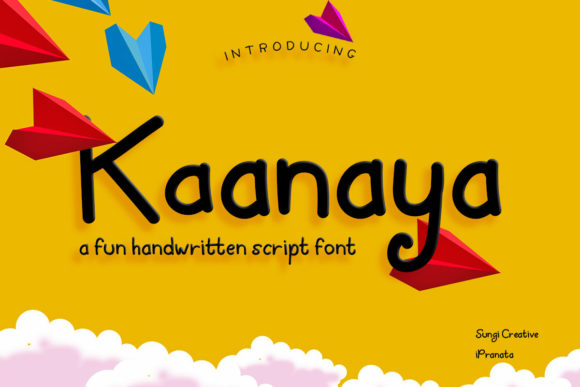
Kaanaya immediately conveys a warm, personal, and expressive vibe. Its fluid, uneven strokes and natural imperfections give it a human touch that feels authentic. Unlike many polished script fonts, which can feel overly refined or artificial, Kaanaya has a casual, almost handwritten quality that makes it feel like it was written by a real person rather than generated by a digital tool.
This personality makes it ideal for brands that want to communicate approachability, creativity, or a craftsman’s touch. It works well for boutique businesses, artisanal products, and any project aiming to feel more personal than corporate.
Real-World Performance: Where It Shines
In logo design, Kaanaya can be a strong choice when paired with a more structured typeface. Its organic flow contrasts nicely with serif or sans serif fonts, creating visual interest without overwhelming the design. However, it’s best used as a secondary element rather than the primary logo font, especially for businesses that need a clear, scalable identity.
For packaging design, Kaanaya adds a unique flair that stands out on shelves. It works particularly well on product labels, where its handwritten style can evoke a sense of authenticity. But it’s important to test it at different sizes—especially when used in small text or on crowded designs—since the legibility can suffer if not handled carefully.
In editorial design, such as magazine layouts or blog graphics, Kaanaya can be an effective decorative element. It’s great for headings, pull quotes, or section dividers, where its expressive nature can enhance the visual rhythm of a page. However, it’s not suited for body text due to its low x-height and inconsistent stroke widths.
Where to Use It Carefully
While Kaanaya is visually appealing, it’s not a font for every situation. Large headlines, for example, can become too busy or hard to read if not properly spaced. The same applies to brand marks or logos that require clarity and precision. In these cases, a more structured font might be a better fit.
When used in social media graphics or digital ads, Kaanaya can add a creative edge, but it needs to be tested on different platforms and screen sizes. On smaller screens, the details may get lost, reducing its impact. Similarly, in premium packaging or high-end branding, the font’s informal nature might clash with the desired level of sophistication.
Readability and Brand Consistency
One of the key considerations when choosing a font is how it affects readability. Kaanaya, while beautiful, is not the most legible option for long-form text. Its lowercase letters often lack distinct shapes, making it harder to distinguish between similar characters. This means it should be reserved for short phrases, headings, or decorative elements rather than extended blocks of text.
For brand consistency, using Kaanaya across multiple touchpoints requires careful planning. If it’s part of a brand’s visual identity, it should be paired with other fonts that complement its style without conflicting. This is where font pairing becomes essential. Testing it beside serif, sans serif, or other script fonts can help determine how well it integrates into a broader typographic system.
Practical Designer Notes
Before finalizing Kaanaya for a project, I recommend testing it in black and white to see how it performs without color. Sometimes, the visual weight and contrast of a font change significantly when stripped of color, affecting its overall impact.
Check small-size readability by printing samples or viewing them on different devices. Also, try it on real mockups—whether it’s a business card, website header, or packaging prototype—to see how it looks in context. Compare uppercase and lowercase versions to ensure they work well together, and review spacing to avoid overcrowding or awkward gaps.
Finally, confirm the commercial licensing before using it in client projects or business assets. While Kaanaya may look great, using it without proper rights can lead to legal issues down the line.
Conclusion: A Creative Choice, Not a Universal One
Kaanaya is a premium font that brings a unique, handmade feel to design projects. It excels in areas that benefit from a personal, expressive touch—such as branding for creative businesses, editorial layouts, or social media visuals. However, it’s not a one-size-fits-all solution.
As a designer, I appreciate fonts that offer character and personality, but I also value functionality. Kaanaya delivers on the former but requires thoughtful application to avoid compromising readability or brand professionalism. If used correctly, it can elevate a design with its warmth and individuality—but it’s not a font to rely on for every project.